- Time too short for wages to adjust to price level
- Workers may not be aware of changes in their real wages due to inflation, therefore they have adjusted their labor supply decisions and wage demands accordingly
- Nominal wages: the amount our money received per hour, per day, or year
Price
Level
|
Wage
Level
|
Employment
Level
|
Implications
|
|
Keynsian
or Horizontal
|
Fixed
|
Fixed
|
Flexible
|
Output
depends on change in supply
|
Intermediate
|
Flexible
|
Fixed
|
Flexible
|
Output
depends on change in price level and employment level
|
Vertical
or Classical
|
Flexible
|
Fixed
|
Fixed
|
Output
depends on change in price level
|
LRAS
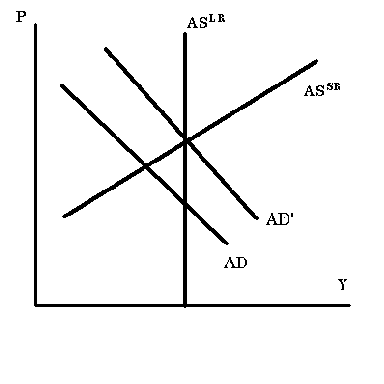
- Time long enough for wages to adjust to price level
- Key Assumptions
- Wages and prices are flexible
- Changes in wages and price off set one another
- Represented by a vertical line
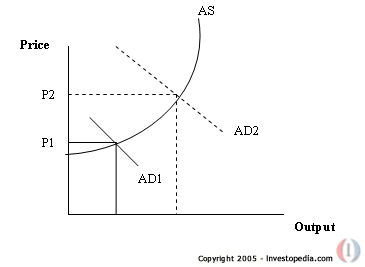
- Demand Pull Inflation
- Economic Growth

- Cost Push Inflation

- Recession
Phillip's Curve
- There is an inverse relationship between inflation and unemployment
- If inflation persist and the expected rate of inflation rises, then the entire SRPC moves upward (stagflation is possible)
- If the inflation expectations drop such as
- technology then the SRPC will move downward
- Decrease in AD= down/right along SRPC
- SRAS shifts to the right=SRPC shifts to the left (disinflation)
- SRAS shifts to the left=SRPC shifts to the right (stagflation)
- Only affected by unemployment (seasonal, frictional, structural)
- The major LRPC assumption is that more worker benefits create higher natural rates, and fewer worker benefits create fewer natural rates of unemployment
- Unemployment rises, LRPC shifts right
- Unemployment lowers, LRPC shifts left
- Misery Index: combination of inflation and unemployment in a given year, single digit misery is good
- It is a rapid and significant increase in resource prices, which causes SRAS to shift while producing a corresponding sifts in the SPRC
- Examples:
- Increase wages
- Oil embargo
- Depreciation of the U.S. dollar
- Where there is a simultaneous increase in inflation and unemployment
- When inflation decreases
- Tend to believe that the AS curve will determine levels of inflation, unemployment,and economic growth
- Also supports policies that promote GDP growth by arguing that high marginal tax rates alone current system if transfer payments unemployment, social security, welfare)
- They provide disincentives to work, invest, innovate, and undertake entrepreneur ventures
- Amount of tax paid on an additional dollar of income, changes from year to year
- As tax rates increase from 0, tax revenues increase from 0 to maximum level then decline
- Tax revenue=government revenue
- Tax rates above or ideal rate will decrease tax revenue
- Where the economy is located on the Laffer Curve is difficult to determine
- Tax cuts increase demand which confule inflation, therefore demand may exceed supply
- The impact of tax rates on incentives to work, save, invest are small
