Macroeconomics vs. Microeconomics
- Macroeconomics: study of major components of an economy (inflation, GDP, unemployment, supply and demand)
- Microeconomics: study of how households and forms make decisions and how they interact in the markets
- Positive Economics vs. Normative Economics
-Positive: tempting to describe the world as it is (ex: minimum wage causes unemployment)
-Normative: describes the worlds and how it should be, prescriptive in nature (ex: the government should raise minimum wage)
- Wants vs. Needs
-Wants: desires of citizens, much broader than our needs
-Needs: basic requirements for survival
- Scarcity: most basic fundamental economic problem that all societies face
- facing unlimited wants with limited resources
- Shortage: a situation in which quantity demand is greater than quantity supplied
- Good vs. Wants
-Goods: tangible commodities (bought, sold, traded, and produced), consumer and capital goods that are intended for final use by the consumer
-Wants: items used in the creation of other goods such as factory machinery and trucks
- Services: work that is performed for someone else
- Factors of Production (FOP)
- Land (natural resources)
- Labor
- Capital- human/physical (tools, machinery, buildings)
- Entrepreneurship
-Human capital: human made objects used to create other goods and services
-Physical capital: human made objects used to create other goods and services
- Opportunity Cost: most desirable alternative given up by making a decision
- Production Possibilities Graph (PPG), Production Possibilities Curve (PPC), Production Possibilities Frontier (PPF)
-Production Possibilities Graph: shows alternative ways to use resources
-Productive Efficiency: producing at the lowest cost, allocating resources efficiently and have full employment of resources; at any point on the curve
-Allocative Efficiency: combination of most desired by society; where to produce on the curve
- Example of Graph:

Point D: Attainable, but inefficient
Point B and A: Attainable, but efficient
Point C: Unattainable
- Law of Increasing Opportunity Cost
-When resources are shifted from making one good or service to another, the cost of producing the second item increases
-This occurs because not all resources are equally suited for the production of all goods and services
- 4 Key Assumptions of Production Possibilities
- Only two goods can be produced
- Full employment of resources
- There are fixed resources
- Fixed technology
- Demand and Supply
-Demand is the quantities that people are willing and able to buy at various prices
-The Law of Demand: there is and inverse relationship between quantity demanded
-Change in quantity demanded is caused by change in price
-Causes of "change in demand":
- Change in buyers taste (advertising)
- Change in number of buyers
- Change in income ((normal goods, inferior goods)
- Change in the price of related goods (substitute goods complimentary goods)
- Change in expectations
-Supply is the quantities that producers or sellers are willing and able to produce/sell at various prices
-The Law of Supply: there is a direct relationship between the price and quantity supplied
-Change in quantity supplied is caused by a change in price
-Causes of "change in supply":
- Change in anything except price, such as factor price
- Change in resource
- Change in technology or technique
- Change in taxes or subsidies
- Change in prices of other goods
- Change in expectations
- Change in the number of supplies
- Elasticity of Demand
-Elastic Demand: a product is elastic when demand will change greatly given a small change in price (greater than 1)
- Many substitutes
- Luxury goods
-Inelastic Demand: a product is said o be inelastic if the demand for it will not change or it changes very little regardless of price (less than 1)
- Few substitutes
- Necessary
- Calculating Elasticity Demand

- Video of Elasticity Demand In Steps
- Total Revenue
(Price)(Quantity)= Total Revenue
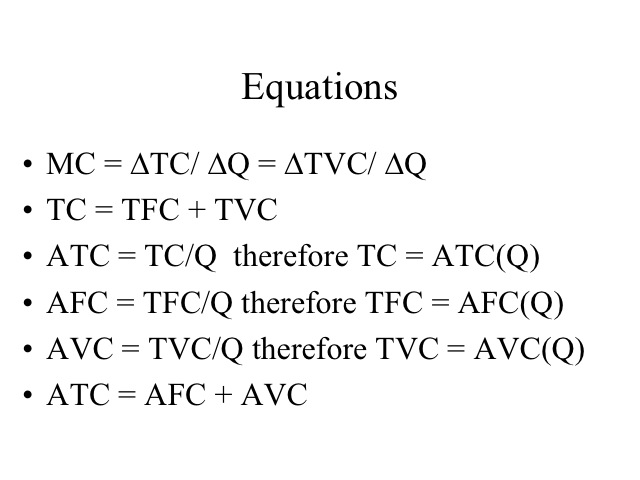
- Other Equations
- Price Floor and Price Ceiling
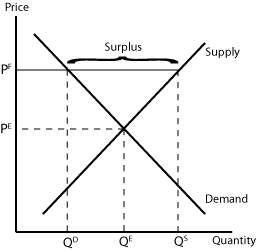
-Price Floor: minimum price for good or service
-Price Ceiling: maximum price that may be exchanged for good or service
- Expansion
-Real output in the economy is increasing, and the unemployment rate is deadening
-The peak is the real output at its highest point
- Recession
-Real output is decreasing, and the unemployment rate is rising
- Trough
-Lowest point of real GDP
